Verify that the invoice was sent to the right customer, the agreed due date has passed, and the amount is still outstanding after confirmed payments. Send a brief factual reminder with the original invoice and a clear payment route, then follow up consistently and document any dispute or revised payment plan. Escalation, late interest and recovery rights depend on your contract and the governing law, so do not add penalties automatically.
In this guide
Confirm that the invoice is actually overdue
Before sending an increasingly urgent message, check the underlying transaction. Find the accepted quote or contract, the issued invoice, its due date, the delivery or service evidence and the customer contact who handles accounts payable.
Confirm that the customer received the correct document. An invoice addressed to a project manager can wait unnoticed if the buyer requires a separate accounts-payable inbox or a purchase-order number. Check whether you supplied the necessary supplier details and any customer-specific reference. Correct a real invoice error before demanding payment on that error.
Next inspect the payment records. A customer may have paid from another trading name, included multiple invoices in one transfer or sent a partial amount. A remittance notice is helpful but is not the same as a confirmed settlement. Match the bank receipt or processor settlement to the invoice number before reporting the debt.
Finally confirm the due date. "Net 30" often refers to thirty days after an agreed starting event but the contract may define a different event. Count dates using the agreed rule, not a casual reading of the phrase. The NineBrief payment-terms guide explains how to make due dates explicit.
If the date has not passed, consider a neutral advance reminder only if it suits the customer relationship. Do not call an unpaid but not-yet-due invoice "late."
Put the amount owed on one small account statement
The invoice face value is not always what remains owed. A clear follow-up uses the current, verified balance rather than blindly repeating the original total.
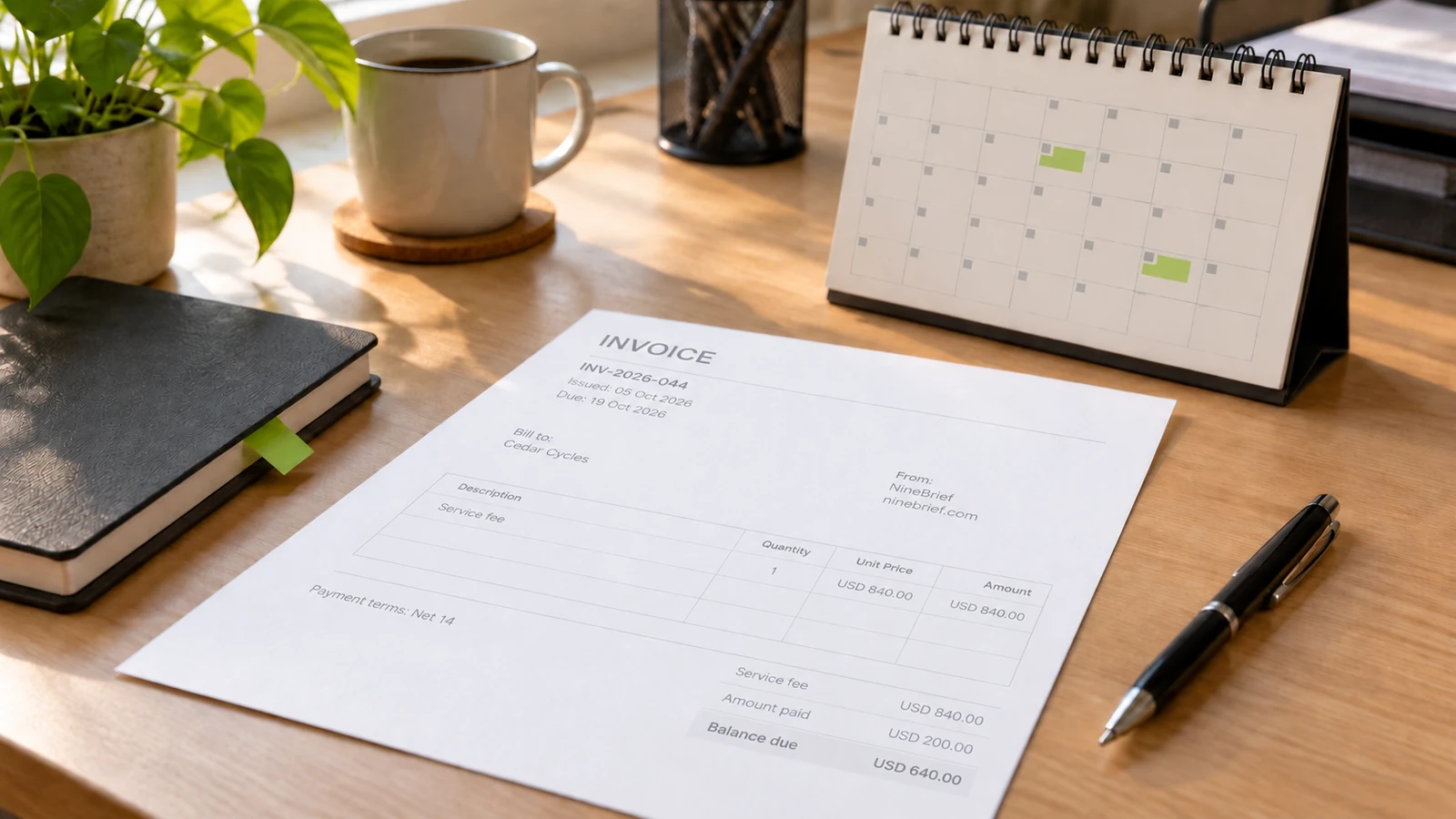
Imagine Cedar Studio issued fictional invoice INV-2026-042 for $1,450 of completed design work on 1 May 2026, with an agreed 15 May due date. The customer subsequently paid $450, which the business confirmed in its bank on 19 May. The remaining balance is not $1,450; it is $1,000.
| Record | Amount |
|---|---|
| Issued invoice | $1,450 |
| Confirmed payment on 19 May | −$450 |
| Current outstanding balance | $1,000 |
| Unverified promised transfer | $0 deducted |
The check is $1,450 − $450 = $1,000. If the customer says a second $200 is on its way, record that as a promise or pending item, not money received. If it later clears, the balance becomes $800. Never subtract the same bank receipt twice because both an email and the bank record refer to it.
The original invoice may still show $1,450 because that was the agreed charge. A separate current balance statement or reminder can explain the partial receipt. Do not quietly alter the service price to $1,000 as though the business gave a $450 discount.
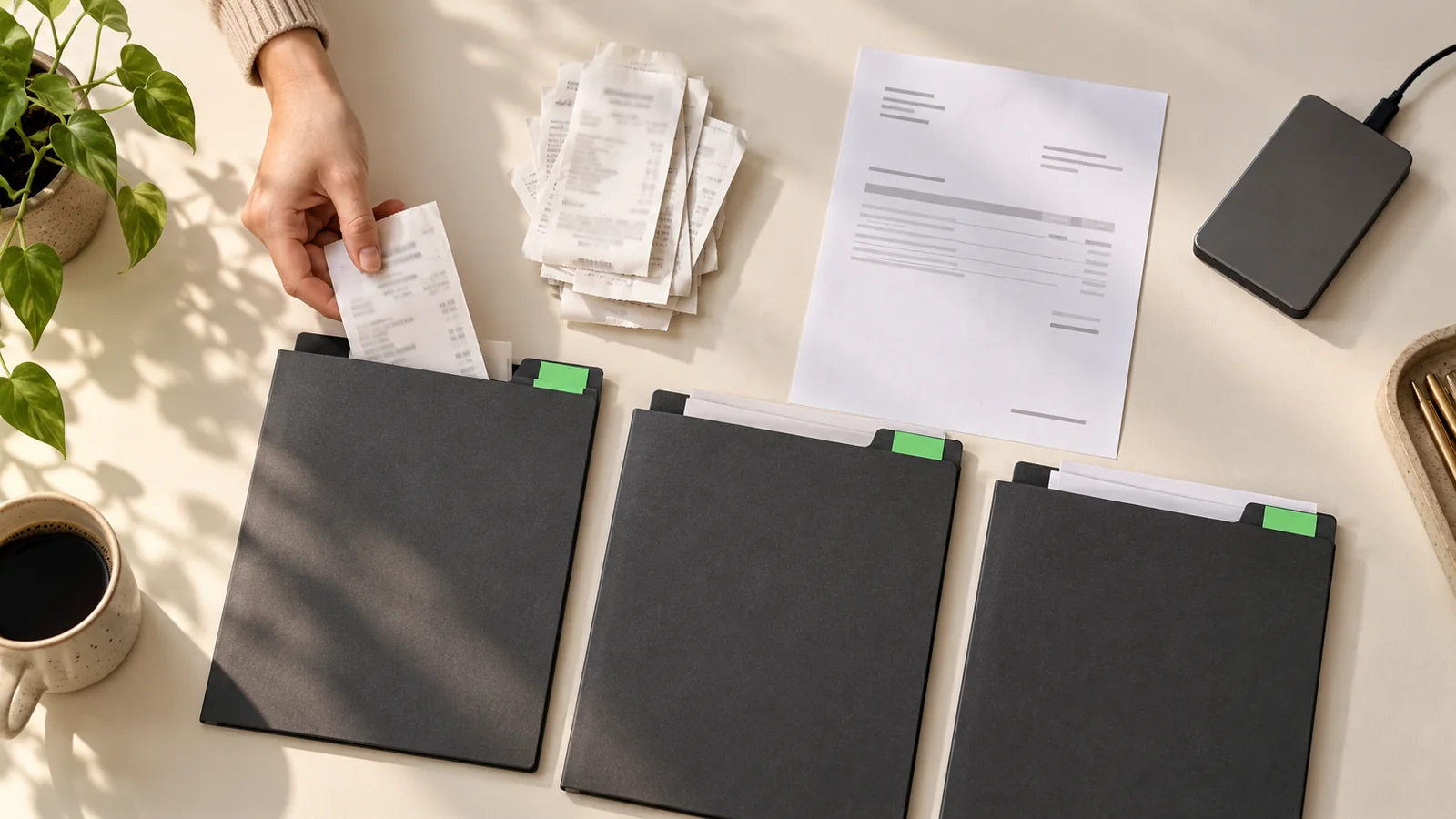
For long-lived relationships, a register of invoice reference, date, agreed terms, payments, open balance and contact history makes follow-up less emotional and more factual. The recordkeeping guide gives a small-business filing approach.
Check the real reason for the delay
A missed due date can have several causes. Each calls for a different next action:
- Document missing: resend the exact issued invoice and confirm that the accounts address is correct.
- Reference missing: provide the purchase-order, supplier or work-completion number required by the buyer, with a correction trail if the original document is wrong.
- Payment run timing: ask for the actual scheduled payment date and reference rather than accepting "next week" indefinitely.
- Disputed work: ask which line is disputed and whether the rest of the invoice is accepted.
- Cash-flow difficulty: discuss an agreed and documented payment plan if you are willing and local rules permit it.
- Potential fraud or misdirection: independently verify any new bank-account details by a trusted channel, especially if the customer says it already paid.
An overdue reminder is useful only if the recipient can act on it. Repeatedly sending a large PDF with no clear question may achieve less than one precise message.
The Australian government's guidance on unpaid invoices recommends checking the contract, sending a reminder and considering dispute resolution before more formal recovery. It is Australian official advice rather than a universal debt-collection law.
Use a measured sequence instead of instant escalation
There is no single legally required or commercially ideal reminder interval across all countries and customers. A practical internal schedule can help your team be consistent, but it should be adapted to the agreement, payment habits and risk.
| Stage | Possible timing after the verified due date | Purpose |
|---|---|---|
| Friendly check | Next working day | Confirm receipt and remove simple administrative blockers |
| Specific follow-up | Several working days later | Obtain an exact payment date or itemized reason for dispute |
| Formal review | After agreed follow-up passes without resolution | Review contract, local law, dispute options and next proportionate action |
The stages are business suggestions, not automatic legal deadlines or a product feature. Do not blindly send stage two if the customer has already paid, acknowledged a genuine error or entered an agreed dispute process.
Make reminders predictable. The first should be a courteous question; the second can state the evidence and request a concrete date; a formal demand requires more care about governing law, consumer protection, debt-collection conduct and the actual contract. Retaining notes from calls and email replies also helps avoid two staff members issuing contradictory demands.
First reminder: clear and cooperative
A useful initial message includes a short subject, original reference, due date, current balance and a convenient path to discuss a problem. It need not use the phrase "final notice" or threaten legal action.
Subject: Payment check — invoice INV-2026-042
Hello Lakeview Market accounts team. Our records show that invoice INV-2026-042, issued on 1 May and due on 15 May, has an outstanding balance of $1,450 as of 18 May, before the subsequent confirmed receipt. I have attached the issued invoice for convenience. Could you confirm that it reached the right team and advise the expected payment date? If any reference or line needs clarification, please let us know.
That version is correct on 18 May, before the later $450 payment. After that receipt is confirmed, the same message must not be reused unchanged. An updated version should state that $450 has been received and $1,000 remains.
A reminder should not ask the customer to pay an amount that no longer exists. Keep the time when the figures were verified, and check the account again immediately before sending.
Second reminder: ask for a definite next step
Suppose it is now 22 May. Cedar Studio has confirmed the $450 payment, but the remaining $1,000 is unpaid and no new date has been agreed.
Subject: Outstanding $1,000 — invoice INV-2026-042
Hello Lakeview Market accounts team. Thank you for your $450 payment received on 19 May. The remaining amount on INV-2026-042 is $1,000, with the original agreed due date of 15 May. Could you confirm whether the balance is approved for payment and the date we should expect it? If a particular service line is disputed, please identify it so we can investigate. Our original invoice and payment summary are attached.
This message does four useful things: acknowledges the payment, provides the actual balance, asks for a date and offers a route to resolve a legitimate question. It does not promise automatic collections or imply interest has already accrued.
Where a client needs a revised payment arrangement, put the actual agreed instalments, dates, payer and default consequences in writing. An informal phone call can start the conversation, but a record of what both sides accepted helps later.
Separate a genuine dispute from an ordinary overdue balance
If the customer challenges a line, find the accepted scope, work order and evidence of the service. Ask whether it disputes the whole charge or only a specific part. Do not assume a missing payment means a dispute, but do not ignore an explicit one either.
Suppose the same customer accepts $1,200 of a $1,450 charge but disputes $250 of additional editing. A $450 payment already received does not automatically tell you which line the customer intended to settle. Agree a clear allocation rather than guessing.
Keep the amount accepted, amount disputed, amount paid and any credit adjustment separate. A disagreement about the $250 should be investigated through the agreed approval or change-order record. Depending on the agreement and governing law, you may be able to pursue the undisputed portion, but do not present that as a universal rule.
If investigation proves you billed incorrectly, follow an appropriate invoice-correction process with a traceable original and adjustment. Do not silently delete the older version. The customer's accounts department needs to recognize what changed.
Late fees, interest and recovery costs need a lawful basis
The biggest avoidable mistake in a collection email is adding "10% late fee" because it sounds persuasive. A fee on an invoice is not automatically enforceable because you typed it there. Check the written agreement, applicable law, whether the customer is a business or consumer, and any mandatory notice.
For example, the UK has statutory rules concerning certain business-to-business late commercial payments. GOV.UK's guidance explains when payments become late, and its interest guidance discusses statutory interest and contractual alternatives. That is not a general global permission to add interest to consumer invoices, and the reference rate and legislation can change. Recheck the current law before relying on figures.
As of 14 November 2026, the UK Commercial Payments Bill remained a Bill in the House of Commons, not enacted legislation. The government said on 19 October 2026 that most proposed measures were expected to commence in late 2027 or early 2028, subject to parliamentary approval and secondary legislation. Do not charge fees or assert new statutory rights based on those proposals. Check current parliamentary status and the applicable rules before taking collection action.
Australia's business.gov.au payment terms guidance advises stating how overdue payments are handled in the agreed contract. US states and Canadian provinces have different laws about collection practices, interest and consumer protections; do not borrow a UK formula for them.
If you do charge a lawful fee, document how it was calculated and the required notice or invoice treatment. This guide deliberately does not supply a universal interest calculator.
Know when to pause work or escalate
If reminders fail, review the relationship and existing agreement before doing more work on credit. Check whether you can lawfully pause future work, whether current obligations are already due and whether vulnerable consumers or regulated sectors need different treatment. Abruptly abandoning a live project can create its own breach.
Potential next steps include a documented payment plan, formal letter of demand, mediation, independent debt advice, approved collection service or legal assistance. Their order and suitability differ by contract, amount and jurisdiction.
The Australian government outlines reminders, letters of demand, dispute support and legal options. UK businesses can consult the Small Business Commissioner's guidance and official late-payment rules. These are country-specific resources; a letter of demand should not be copied across borders without review.
Never fabricate a legal deadline, court filing or debt-collection authority in a message. An overdue invoice is not an invitation to threaten the client.
Prevent the next overdue invoice at the quote stage
The most effective collection work often happens before there is a late bill. Verify the customer's billing entity and accounts contact, whether a purchase-order is required, who approves a service and what triggers payment.
Make the accepted terms specific: deposit if agreed and lawful, clear due date, acceptable payment channels, delivery evidence and the process for variations. State these before the job begins rather than inserting them into the invoice after the work is complete.
The Australian guidance on preparing quotes recommends clear scope, costs, timings and payment conditions. NineBrief's quote and invoice guide explains which document belongs at each stage.
For recurring clients, review whether invoices are sent as agreed, whether the right reference travels across months and whether payment allocations are keeping up. A predictable, courteous process is often more effective than a late-night sequence of increasingly angry emails.
What NineBrief can do today
The NineBrief Invoice Generator helps you prepare an ordinary invoice with a clear customer, itemized charges and agreed due date. Save the issued copy so you can attach it to an email and refer to its stable invoice number.
This guide does not claim that the released free tool automatically sends reminders, detects bank transfers, collects money, calculates statutory interest, negotiates payment plans or operates a debt-collection service. Follow-up messages and payment reconciliation remain your responsibility using your actual evidence.
Use the payment-terms guide to improve new invoices, rather than assuming a change to an old invoice can retroactively create new conditions.
Questions about chasing unpaid invoices
How soon should I send the first reminder?
First verify the contractual due date and that the account is still unpaid. A friendly message on the next working day can be reasonable, but there is no universally correct interval.
Is it rude to contact the customer twice?
Not when reminders are factual, proportionate and responsive to replies. Avoid contacting people through inappropriate channels or repeatedly demanding money that is disputed or already paid.
Should I send a new invoice every week?
Generally keep the original bill reference and send a current balance/reminder. Reissuing new charges for the same underlying sale can create duplicate debt; formal correction rules may apply if the original is wrong.
What if the customer made a partial payment?
Confirm the receipt, allocate it properly and request only the remaining amount. In the worked example, $1,450 less a confirmed $450 leaves $1,000.
Can I add a late-payment penalty now?
Only if the contractual and legal conditions allow it. Do not assume an invented percentage becomes enforceable merely because it appears on a PDF.
Does NineBrief automatically chase a client?
No. The released free generator creates documents. This article provides a process and sample language, not a claim of an automated reminder feature.
Before your next follow-up
- Check the actual signed or accepted payment terms and due date.
- Confirm the customer received the original invoice and required references.
- Match every receipt against the bank or processor evidence.
- Recalculate the amount outstanding before sending each message.
- Ask for an exact payment date or a specific disputed item.
- Record correspondence, promises and changed agreements.
- Check local rules before any interest, demand letter or recovery action.
- Avoid duplicating invoices or collecting sums already settled.
- Keep any correction, repayment plan and actual refund linked to the original reference.
Following up on an invoice is a business process, not a contest over who can write the strongest warning. The right goal is a verified balance, an answerable request and a documented path to resolution.
About this resource
Product instructions are based on the current free-tool implementation; examples are synthetic and their arithmetic is checked. This is practical product guidance, not professional legal, tax or accounting advice.
For how the tools operate, see the Free Tools Terms of Use and Privacy Policy. Send corrections to hello@ninebrief.com without including confidential customer documents.