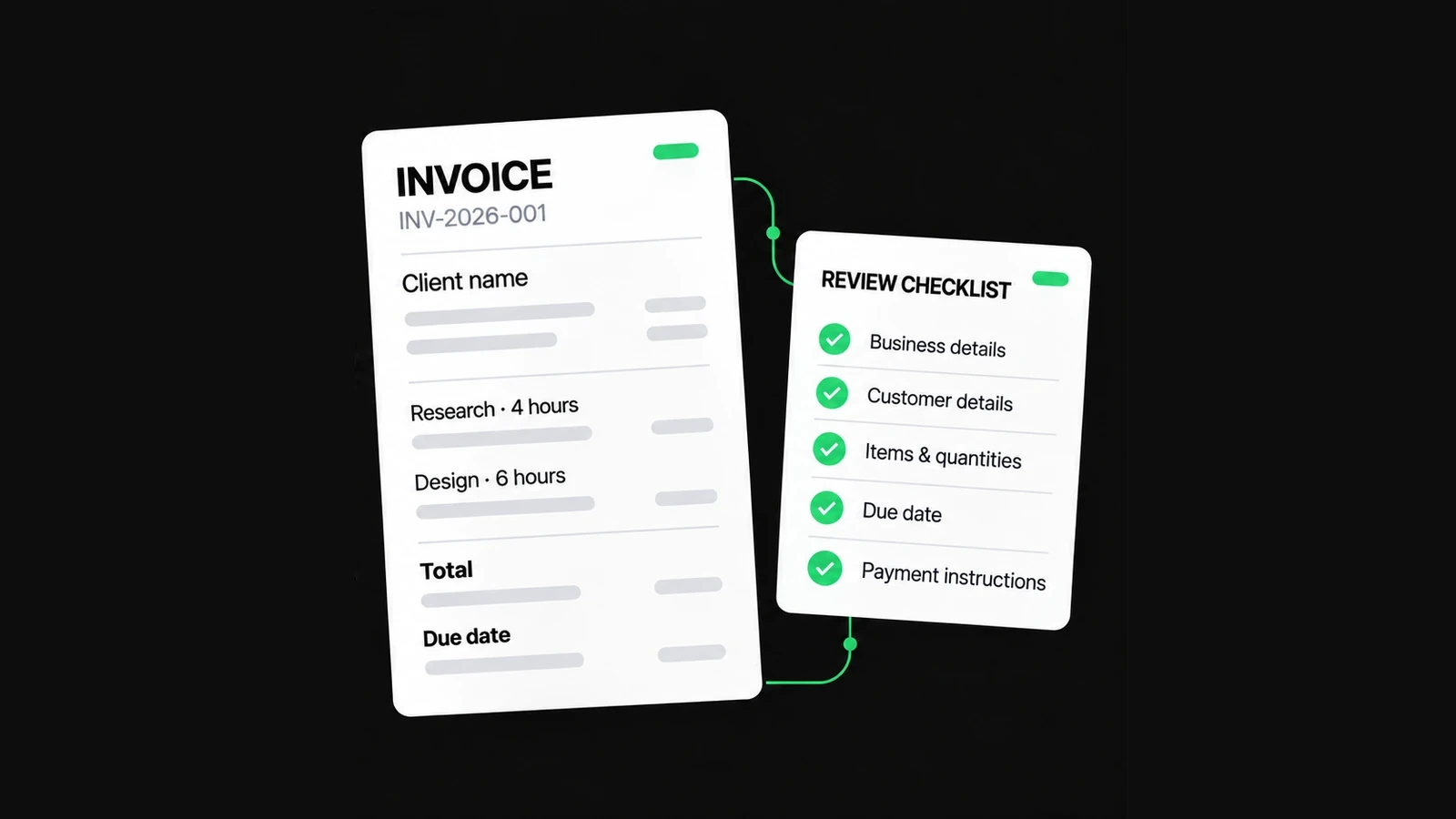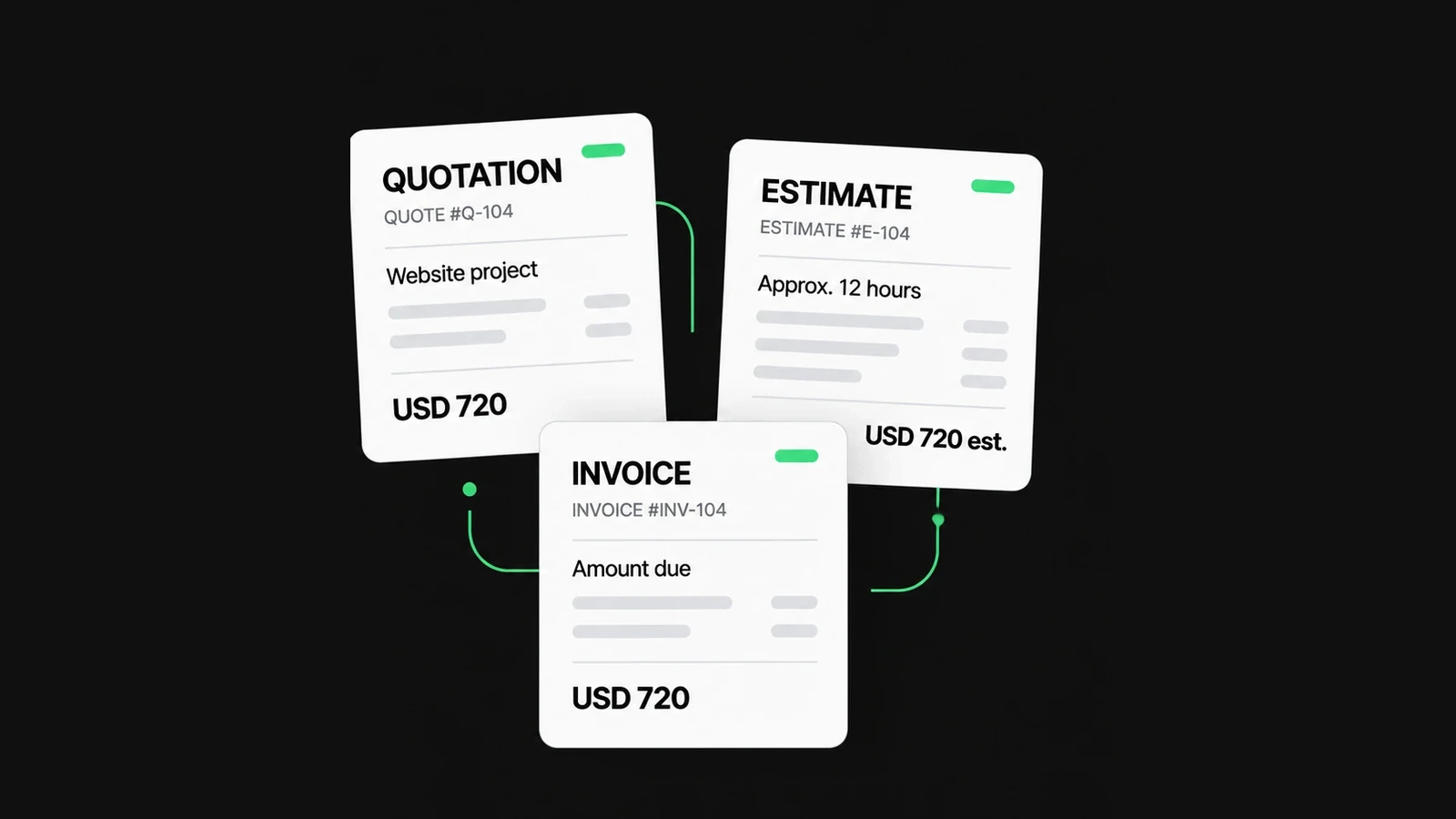
Invoice payment terms state the agreed timing and conditions for payment. Show the payment period, the event that starts it, an explicit due date and usable payment instructions. Net 30 commonly means 30 calendar days from the invoice date, but the agreement may define another starting point. Check the agreed rule instead of treating a label as a universal legal deadline.
In this guide
What payment terms need to explain
Payment terms connect the bill to your agreement with the customer. They should explain when the payment becomes due and how the customer can make it. The invoice's issue date, service period and due date have different jobs: issuing the document does not necessarily mean the work happened that day.
Keep the commercial decision separate from the document layout. A well-designed invoice cannot settle a disagreement about whether payment was due before work, after a completed stage or after acceptance. Check the agreement first, then make the invoice express it clearly.
For the rest of the document's fields, use the first-invoice walkthrough. This guide focuses on the timing, wording and remaining amount rather than repeating that full checklist.
Agree the timing before preparing the bill
Confirm the payer, billing contact, accepted payment method and timing while agreeing the job. Ask whether the customer's approval process needs a purchase-order reference or a particular invoice recipient. Sending a bill to the project contact may not be enough if another team handles payment.
The Australian government’s payment-terms guidance recommends documenting payment timing and accepted methods in invoices and contracts. It is Australian guidance, not a global legal rule. Your own agreement and applicable local requirements determine which terms you can use.
Choose a period you and the customer can actually follow. A shorter deadline does not remove an approval process, and a longer deadline can leave costs unpaid for longer. Resolve those practical constraints before offering a term; this article does not recommend one credit period for every business.
Compare the common labels
The following descriptions use an explicit assumption: a Net period begins on the invoice date and counts calendar days. If your agreement uses business days, receipt or another event, use that rule and state it plainly.
| Term | Meaning in this example | What to make explicit |
|---|---|---|
| Due on receipt | Payment is expected when the invoice is received. | How receipt and the actual due date are established. |
| Net 7 or Net 14 | The balance is due 7 or 14 calendar days after the invoice date. | The invoice date and corresponding due date. |
| Net 30 | The balance is due 30 calendar days after the invoice date. | The starting event; it is not automatically month-end. |
| Agreed milestone | Payment follows the defined project event. | The event, billed amount and payment deadline. |
A requested deposit is a request for payment. It is not evidence that the customer paid it. Likewise, a milestone label does not confirm that the agreed event occurred. Keep those facts in your records and reflect the actual position on the invoice.
Calculate and show the calendar due date
For an invoice issued on October 05, 2026, adding the agreed calendar-day period produces the dates below. The issue date is the starting point; the next day is the first elapsed day. These are checked examples, not default rules for weekends, holidays or receipt-based contracts.
| Agreed period | Due date | Plain wording |
|---|---|---|
| Net 7 | October 12, 2026 | Payment due October 12, 2026. |
| Net 14 | October 19, 2026 | Payment due October 19, 2026. |
| Net 30 | November 04, 2026 | Payment due November 04, 2026. |
| Net 60 | December 04, 2026 | Payment due December 04, 2026. |
Net 30 is not the same as “pay by the end of this month.” It can cross a month boundary, as this example shows. If the agreed starting point is delivery or receipt, record that date rather than quietly using the issue date. Write dates with the month spelled out where a numeric format could be misread.
Use wording the customer can act on
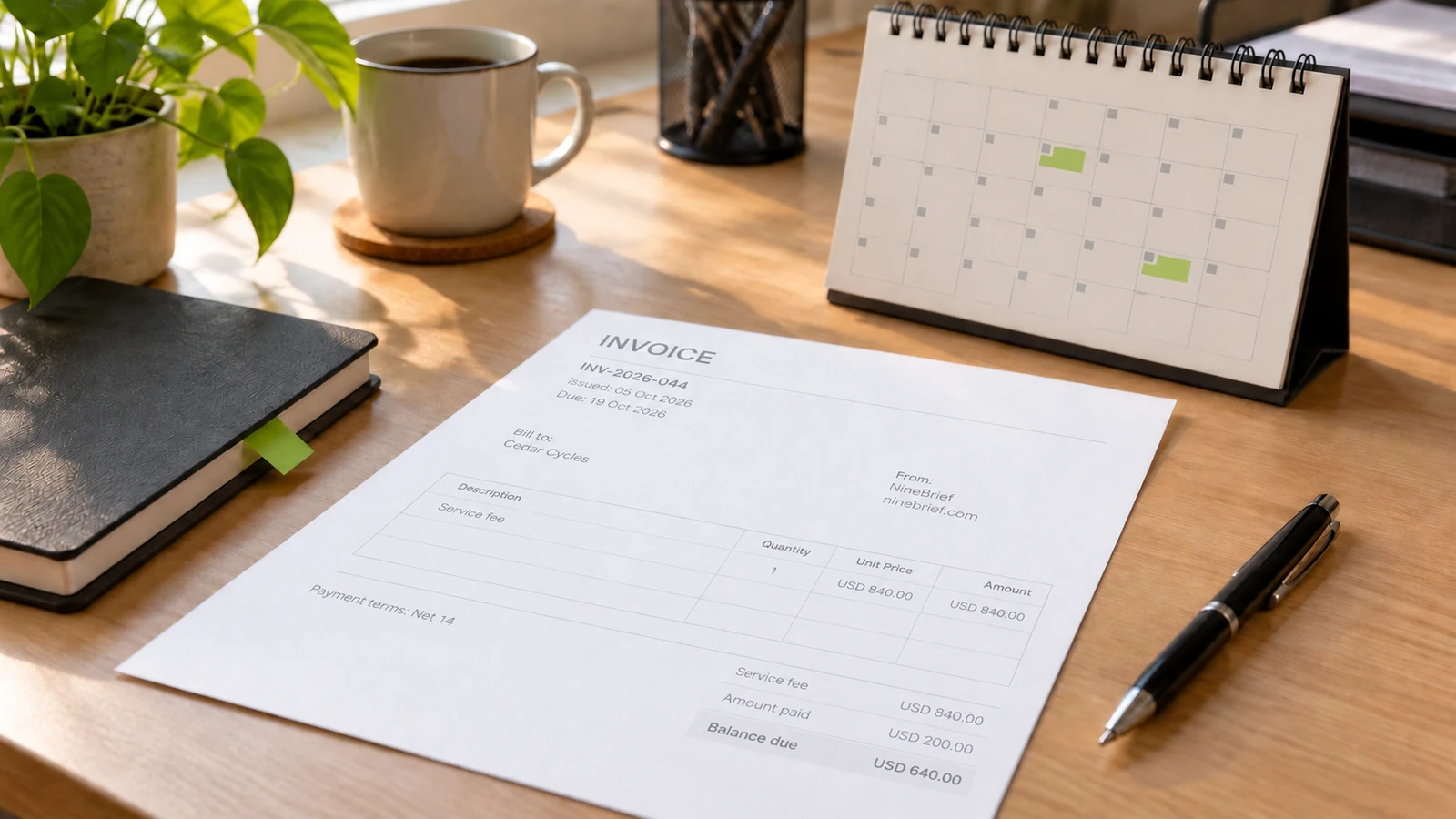
Combine the date, balance, payment route and reference in a short instruction. For the example below, suitable wording is: “Balance of USD 640.00 due October 19, 2026, under the agreed Net 14 terms from the October 05, 2026 invoice date. Pay by the agreed bank-transfer method and use INV-2026-044 as the reference.”
For a stage payment, name the actual agreed event and its record: “Payment for the approved launch stage is due on the date shown above; project approval is recorded under the project reference.” The web-development invoice example shows how to separate stages and approved changes. Avoid wording that implies your invoice itself proves approval.
Include only real payment destinations you have checked. State the currency when it could be unclear, and give the billing contact a way to ask questions. Never put passwords, access tokens or login credentials in payment instructions.
Separate the invoice total from the amount still due
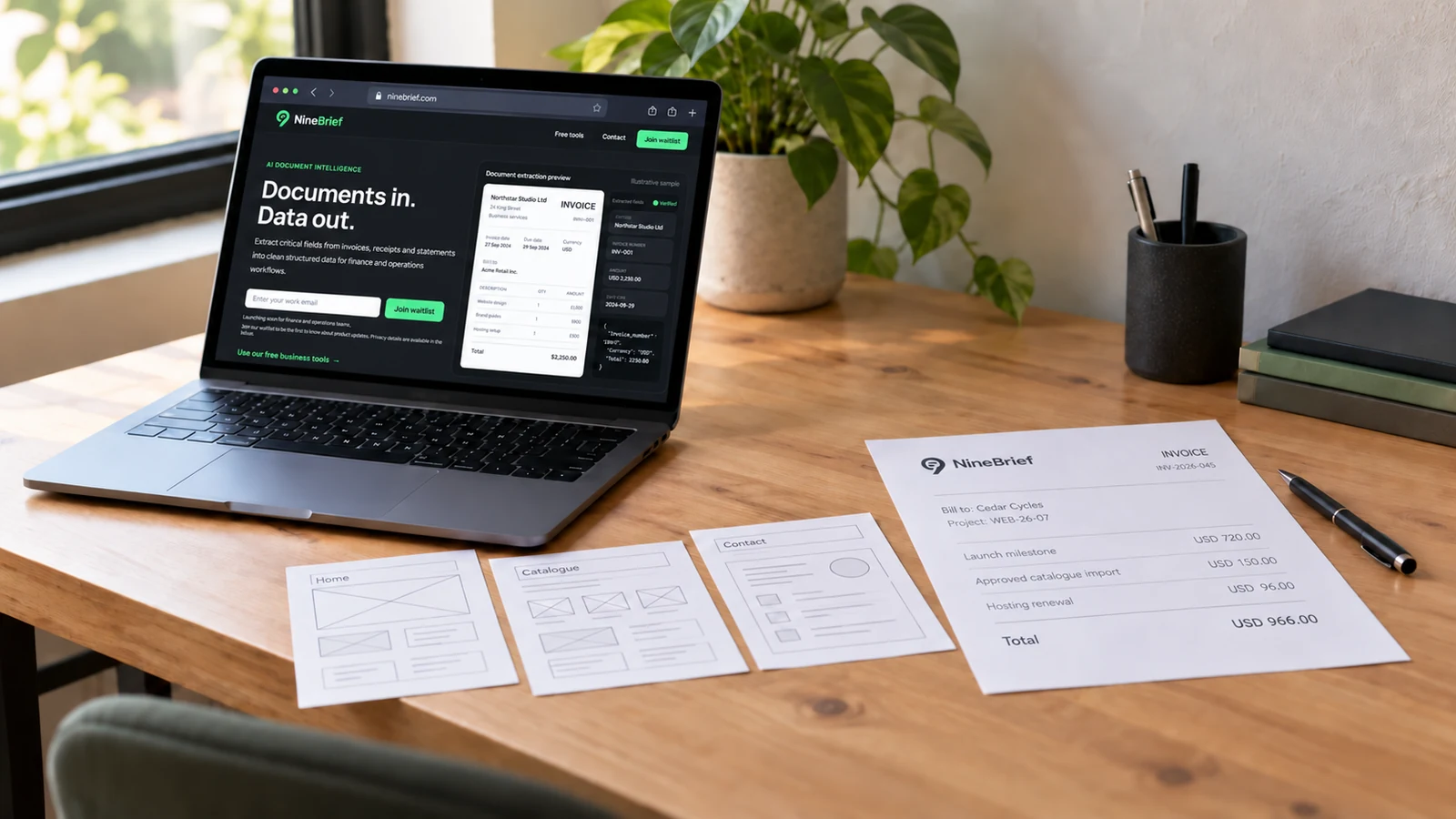
This synthetic bill uses NineBrief as the sender and Cedar Cycles as an invented customer. The agreed service fee is USD 840.00. Assume a payment of USD 200.00 has actually been received and allocated to this same bill.
| Description | Quantity | Rate (USD) | Amount (USD) |
|---|---|---|---|
| Agreed service fee | 1 service | 840.00 | 840.00 |
The service total remains USD 840.00; the verified payment leaves USD 640.00 to collect. Enter the received payment once. Do not also create a negative deposit line or reduce the service price by the same amount, which would deduct it twice.
If an earlier invoice billed a separate stage, its payment usually belongs to that earlier bill's record, not automatically to this invoice's Amount paid field. Reconcile the scope and allocation before recording a payment. A customer's promise or bank-transfer screenshot is not a substitute for checking your own payment records.
Treat discounts and late fees as separate decisions
An early-payment discount needs a clear eligibility date, amount and agreed basis. A discount promised only if payment arrives early is different from an unconditional discount already included in the invoice. Do not subtract an expected future discount as though its condition has been satisfied.
Late fees, interest and recovery charges depend on the agreement and applicable rules. This guide provides no universal rate or ready-made entitlement. Do not paste a fee clause from another business or add one only after a bill becomes overdue without checking its basis. Obtain appropriate advice when the answer depends on your jurisdiction or contract.
Enter and review the terms in NineBrief
- Open the Invoice Generator and preserve an existing draft you still need.
- Enter your checked invoice number, issue date, customer, currency and agreed charges.
- Select the payment term. Review the generated due date against the actual agreement.
- Enter a received payment only after verifying its allocation to this invoice.
- Add verified payment details and any necessary explanation in the existing instructions or notes.
- Review the final preview, save the PDF and export a JSON backup if you need an editable copy.
NineBrief calculates Net due dates from the issue date. Its Due on receipt option also sets the due date to the issue date; the tool cannot observe when a customer receives a file. If your actual date differs, set and check the due date explicitly. Changing the issue date or payment term can recalculate it, so check the final date after those changes.
The free tool does not process payments, verify bank receipts, apply conditional discounts, send invoices or schedule reminders. Status is a document field, not a payment-service confirmation. Send the document through your own agreed channel and keep your external records.
Follow up using the same reference and records
If a bill is unpaid, first check the due date, recipient and payment records. Send a concise manual message identifying the invoice, remaining balance and payment instructions. Ask whether an approval issue or disputed charge needs attention rather than assuming the customer ignored the bill.
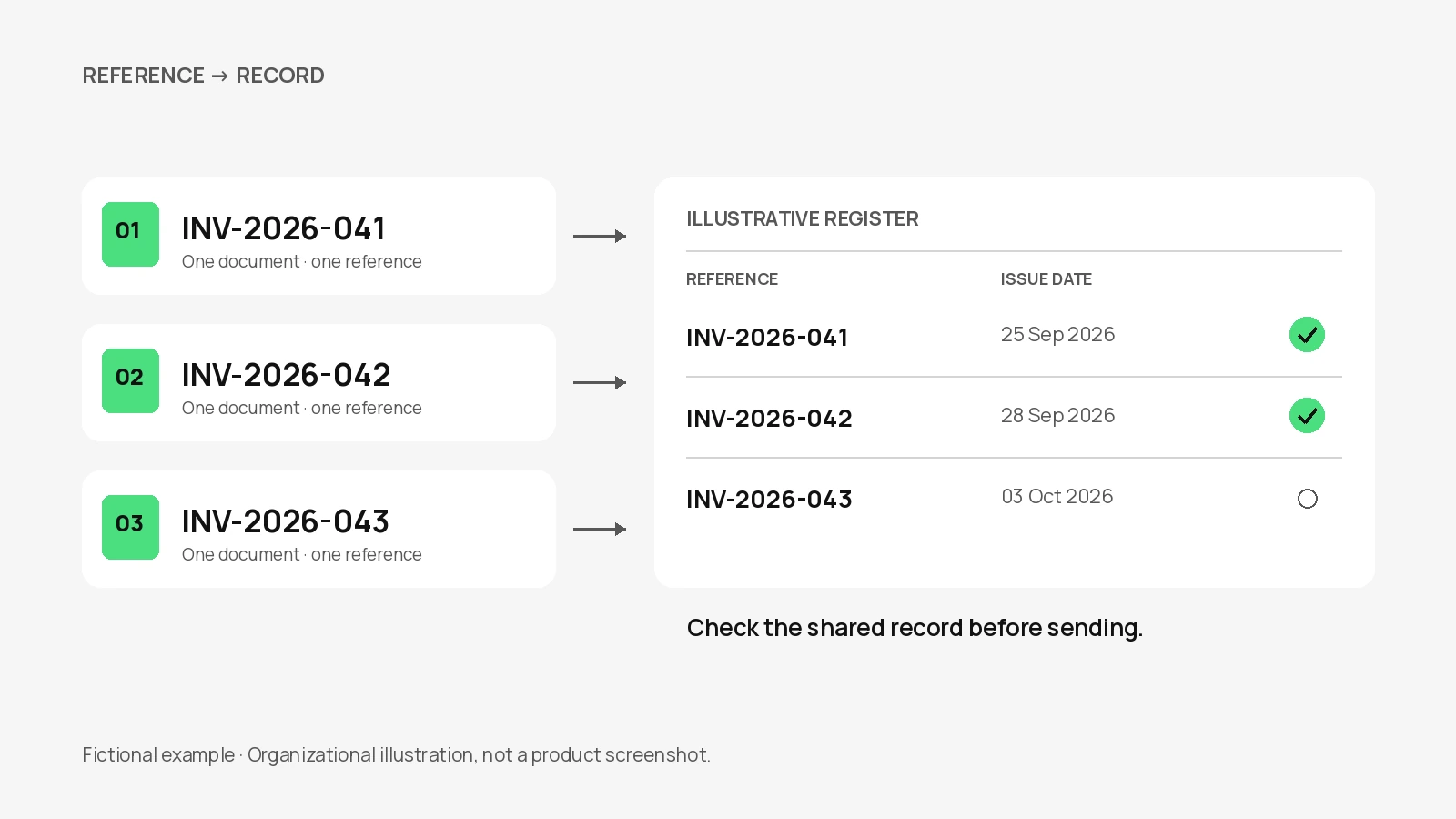
Keep the original issued file and a record of any agreed change. The invoice-numbering guide explains why consistent references help you connect documents and payments across devices. NineBrief does not maintain a shared account-wide invoice register.
Before sending
- The timing matches the customer agreement and identifies the correct starting event.
- The issue date, service period and due date have not been confused.
- The final due date matches the stated term and day-count assumption.
- The balance reflects verified payments allocated once to this bill.
- The currency, payment destination and requested reference are correct.
- Any discount or fee wording has a checked, appropriate basis.
- The right billing contact receives the reviewed file, and an editable backup is retained where needed.
Sources and scope
Sources checked October 05, 2026: Australian government guidance on payment terms and contract payment/milestone details. These are jurisdiction-specific references. The dates, amounts and customer in this guide are original synthetic examples; they do not establish legal, tax or accounting requirements.
About this resource
Product instructions are based on the current free-tool implementation; examples are synthetic and their arithmetic is checked. This is practical product guidance, not professional legal, tax or accounting advice.
For how the tools operate, see the Free Tools Terms of Use and Privacy Policy. Send corrections to hello@ninebrief.com without including confidential customer documents.