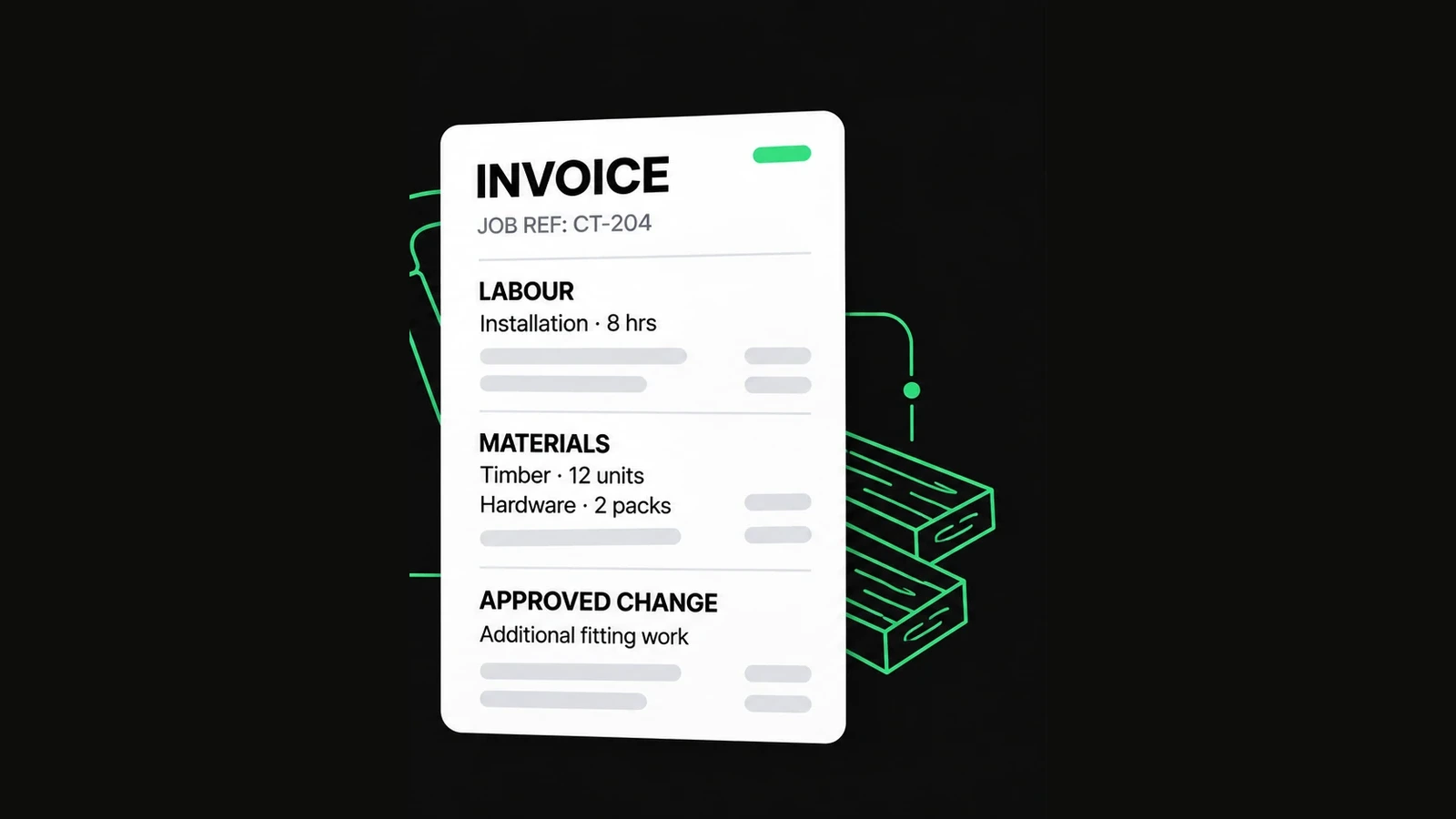

Tie each landscaping invoice to the accepted service period and scope. Describe routine visits, separately agreed pruning or planting, material quantities and any waste-removal charges with dates and units; add extras only with authorization. Reconcile the work log and quote before billing, and explain whether rain-delayed or skipped visits are rescheduled, credited or included in an agreed fixed package.
In this example
Connect the invoice to a real service period
Landscaping businesses are often selling two different things at once. One is a recurring maintenance commitment, such as mowing and edging every week or fortnight. The other is additional work, such as a planting bed refresh, storm clean-up, hedge reduction, soil delivery or a one-time garden redesign.
If an invoice says only "gardening services — $922," the client cannot easily tell whether it covers four scheduled visits, an earlier quoted project or new materials. The amount may be correct, but the document is hard to approve. A useful invoice connects the service period, property or site reference, work completed and price.
Record the customer or property manager who agreed to the work. A tenant may open the gate while the owner or management company is the party responsible for paying. Confirm the billing name and any purchase-order or property reference before the first visit. Do not include private access codes, gate combinations, alarm details or unnecessary resident information on the invoice.
For commercial sites, specify the site address or approved property code, the serviced area and the date range. For household customers, describe only the address and details needed for a legitimate business record. The invoice need not reproduce the entire maintenance log.
Separate recurring maintenance from seasonal jobs
A fixed monthly plan and an hourly call-out are different pricing models. If the customer agreed to four scheduled visits for a set fee, do not quietly charge the same lawn-care work again as extra hourly labor.
A well-written agreement should say what the fixed amount includes: mowing, edging, clippings handling, basic bed weeding, the usual visit frequency and whether fertilizing or specialist treatments are excluded. Also decide what happens when weather prevents access or conditions make a visit unsafe.
An hourly charge can suit unpredictable pruning, clearing or garden restoration, but record who authorized it, the work actually completed and the measured time. A package price may be easier for the customer to budget; it still needs clear scope and a fair treatment of missed or rescheduled visits.
The Australian government's official quoting guide recommends defining work, itemized costs and terms before a job begins. The Canadian federal home-renovation guidance also illustrates the value of detailed scope and material responsibilities. Neither document imposes a worldwide landscaping rate or contract form.
Put each work type in a recognizable line
Useful invoice lines describe an outcome and an agreed unit. The client should be able to compare them with the accepted work order without needing to know your internal cost codes.
| Work | Clear invoice unit | Supporting record |
|---|---|---|
| Routine lawn and edge maintenance | Four scheduled visits for named month | Visit log, scope and any reschedules |
| Hedge shaping | 2.5 agreed labor hours | Approved request and work note |
| Mulch supply | Ten bags at agreed unit price | Material quantity and delivery record |
| Green-waste removal | One authorized collection | Collection or disposal record |
| Additional planting | Number and kind of plants plus planting labor | Agreed variation and completion details |
Avoid three common mistakes. First, do not list materials twice as both "included in maintenance" and "additional materials." Second, do not quietly convert a fixed-price job into hourly billing without agreement. Third, do not introduce disposal, travel, equipment or chemical-treatment fees that were not covered by the accepted terms.
A detailed description can still be concise. "10 bags of 40 L mulch supplied and spread to front beds" gives more context than "garden materials." Check units: cubic meters, bags, plants, square meters and labor hours do not all behave like interchangeable quantities.
A complete $922 landscaping invoice example
Consider a fictional small landscaping business, Mossline Gardens, invoicing Northbank House for June maintenance and an approved garden-bed variation. The agreed monthly maintenance package covers four routine visits at $95 each. The customer separately approved hedge shaping, mulch and a green-waste collection.
After those jobs, the customer authorized four additional plants and 1.5 extra labor hours. All prices below are illustrative US dollars, exclusive of any applicable tax; they are not market-rate estimates.
| Agreed line | Quantity × rate | Amount |
|---|---|---|
| Routine mowing and edging visits | 4 × $95 | $380 |
| Hedge shaping labor | 2.5 h × $68 | $170 |
| Mulch supplied and spread | 10 bags × $12.50 | $125 |
| Green-waste collection | 1 × $55 | $55 |
| Original accepted work subtotal | $730 | |
| Additional agreed plants | 4 × $22.50 | $90 |
| Additional planting labor | 1.5 h × $68 | $102 |
| Approved variation subtotal | $192 | |
| Final service total before tax | $922 |
Verify each stage. $380 + $170 + $125 + $55 = $730. Four plants at $22.50 cost $90, and 1.5 hours at $68 cost $102; together they cost $192. The commercial total is therefore $730 + $192 = $922.
There is no tax calculation in this example because sales tax on goods and services depends on the location and registration of the supplier. There is no automatic "deposit deducted" line because no deposit was assumed. If Northbank House actually prepaid $200, the outstanding commercial balance before tax would be $922 − $200 = $722, but only after that $200 receipt has been verified and correctly allocated.
The $192 variation should have a reference to the actual approval and work log. If the customer never approved the extra plants or labor, remove those items from an invoice for agreed work until the dispute has been resolved. The fact that a worker planted them does not, by itself, settle the contract.
The work log should explain the bill
A useful maintenance log is short enough for field work and detailed enough for billing. Record the job reference, site, scheduled visit date, actual completion date, work performed, material use, access issues and whether a separate extra was authorized.
For the four visits above, the log might show June 3, 10, 17 and 24. If a rainstorm prevented June 17 work, it should instead show the actual rescheduled date or the agreed treatment of the cancelled visit. Do not report four completed visits if only three occurred under a pay-per-visit arrangement.
A fixed monthly maintenance contract may have different terms for rain or rescheduling. Do not automatically issue a credit merely because a visit shifted by two days, and do not assume you can bill the full fixed fee if the entire service period was missed. The agreed scope and applicable consumer law determine what is reasonable.
Take photographs only when useful and permitted. Photos can document visible completion, plant condition or a disputed site, but they do not replace agreement on price. Store them privately with an appropriate date and site reference, not embedded in a public invoice unless necessary.
Control materials, allowances and substitutions
Landscaping jobs involve variable material quantities. A quote may include an allowance for mulch, soil, plants or paving, while actual site conditions require more. Decide whether the customer agreed a fixed material allowance, an exact quantity or payment for actual units supplied.
If the accepted job specifies ten bags of mulch, do not invoice twelve without recording the change. If a nursery substitutes a more expensive plant, contact the customer before purchase where approval is required. Record the product, quantity and any agreed price difference.
The Australian contract-variation guidance emphasizes documenting changes to scope, schedule and price. Canadian home-renovation advice likewise stresses detailing the materials and payment schedule. Specific legal rules may differ for home improvements in a US state or Canadian province.
An allowance is not a blank cheque. The invoice should explain whether the final amount reflects actual use within the allowance or a separately authorized variation. Keep invoices from suppliers as supporting records, but do not assume your resale price must equal your supplier's cost unless that was the accepted pricing agreement.
Waste, travel and equipment charges need agreement
Waste collection and disposal can be significant costs when removing hedges, branches, soil or paving. If disposal was included in the original scope, it should not reappear as a surprise fee. If it was excluded, state the charging basis in the quote and obtain approval where needed.
Similar care applies to equipment rental, fuel surcharges, travel, parking, access restrictions and weekend work. Avoid a generic "miscellaneous" line when a specific agreed charge exists. Customers often understand a visible material or disposal cost better than a total that cannot be traced to the original plan.
Local waste, pesticide, machinery and licensing rules may also apply to the work itself. They are not determined by the invoice template; do not make a compliance claim from having added a line item. If treatment products are regulated, keep the required operational records separately.
Make seasonal jobs and recurring bills distinguishable
A spring clean-up, summer maintenance schedule, autumn leaf collection and winter emergency visit may serve the same property but belong to different agreements. Use clear periods and work-order references so a manager can approve each one.
Recurring maintenance invoices should identify whether the period is in advance or in arrears. If billed in advance, do not describe future visits as already completed. If billed after work, confirm the visits and any service changes. A seasonal one-off can reference the accepted quote and the date the job finished.
Keep customer communication predictable. Explain whether a property needs its own invoice, whether several sites can be grouped and who approves an extra service. If several locations are billed together, the buyer may need a property-level breakdown for its own bookkeeping.
The NineBrief guide to organizing invoices and receipts can help keep each property's issued invoice and supporting records together.
Customers, weather and unfinished work
Outdoor work depends on weather, ground conditions, plant availability and property access. These factors can make an originally reasonable plan change. A good invoice should reflect the work and commercial arrangement that actually resulted.
Suppose a scheduled lawn visit is postponed because the site is flooded. Confirm the new date. If the client instead cancels the visit and the agreement gives a credit, record that credit clearly. If a replacement visit occurs in the next calendar month, make sure it is not accidentally billed in both periods.
For an incomplete landscaping installation, distinguish materials delivered, labor completed and remaining work. A delivery note can evidence materials reaching a site, but it does not prove that planting or final acceptance occurred. The purchase order, invoice and delivery note guide explains the different purposes of these documents.
If the client disputes workmanship, the issue may need an inspection, remedy or agreed variation rather than an unexplained invoice increase. Preserve records of what was promised and what was delivered.
Consumer and tax boundaries depend on the location
A landscaped commercial property and a household garden can be subject to different contract or consumer protections. Materials, labor and plant supply can also be treated differently under sales-tax regimes. Do not apply one tax percentage to every line because the service happens outdoors.
For example, Ontario's home-renovation consumer guidance includes specific protections for qualifying renovation contracts and agreed additional work. It is an Ontario source; its estimates and price rules must not be generalized to every gardening visit or country.
In Australia, business.gov.au describes ordinary invoicing and GST tax-invoice considerations. The US IRS recordkeeping guidance explains the value of retaining sales and purchase documents but does not create a nationwide landscaping sales-tax rule. Canadian GST/HST and provincial rules need their own assessment.
The exact tax classification, consumer notice, insurance requirement or trade licence must be checked for the real supplier and jurisdiction. An attractive invoice is not evidence that every regulatory obligation has been met.
Use NineBrief without implying a recurring billing service
The released free Invoice Generator can help prepare an ordinary landscaping invoice. Enter the correct payer, service dates or period, descriptive lines, units and agreed charges. Review the customer-facing PDF before saving and sending it through your normal business process.
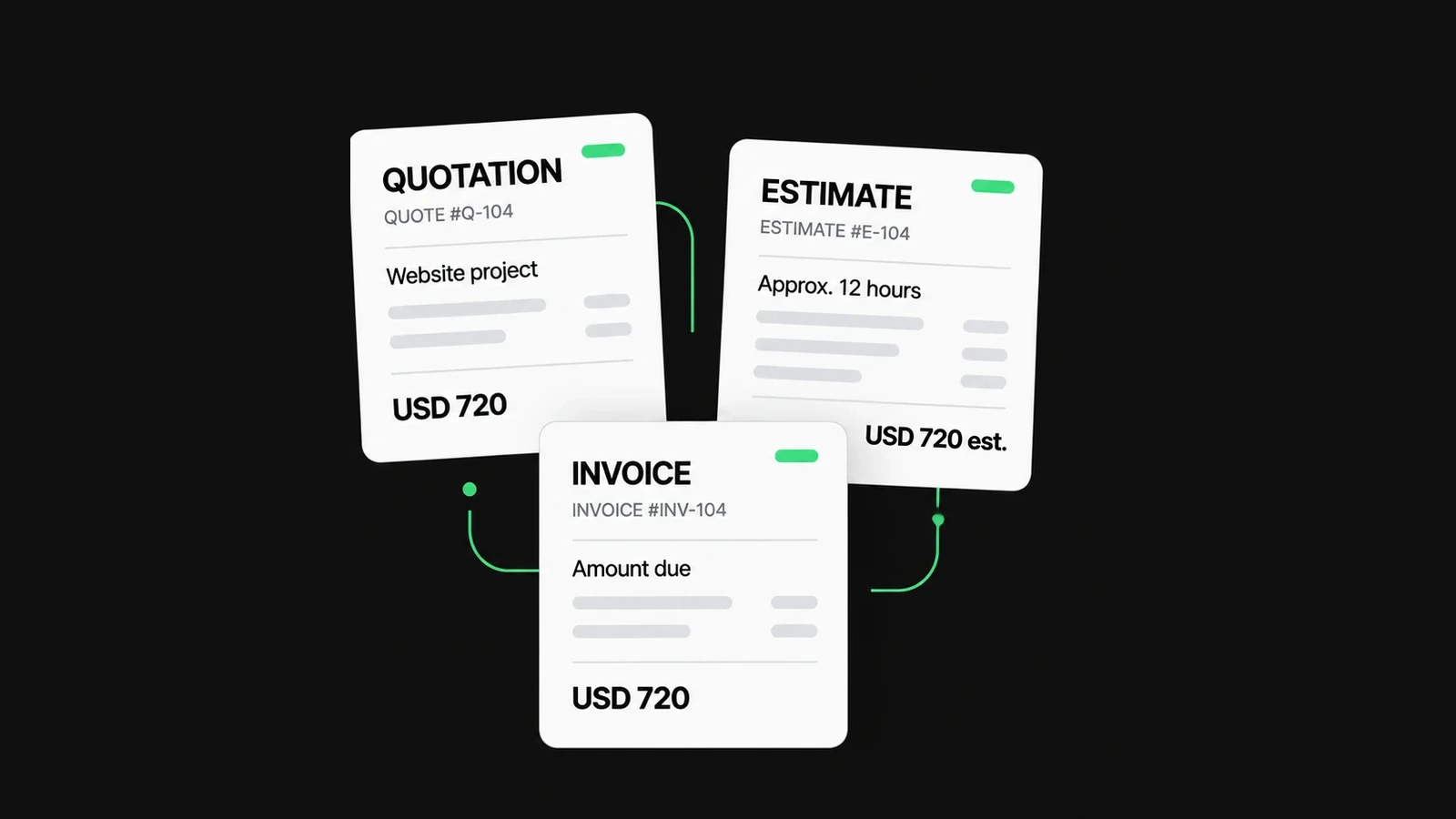
NineBrief also provides a Quote/Estimate Generator for agreed scope and prices. The quote-versus-invoice guide helps keep the proposal separate from the bill.
This article does not claim that NineBrief automatically visits job sites, captures geolocation, schedules lawn services, tracks time, collects customer signatures, handles bank payments or sends recurring invoices. Maintain the work log, approved changes and payment evidence through your own appropriate systems.
Landscaping invoice questions
Can I send one invoice for a month's visits?
Yes, where the agreement and local requirements allow it. State the month, number of visits, sites and services clearly, and describe any separate extras.
Do I need to list every mowing date?
A visit-based contract benefits from a schedule or log, but the level of detail on the invoice can be proportionate. Keep an accessible record that supports the billed quantity.
Should I charge for a rain-cancelled visit?
That depends on the contract, service delivered and applicable law. Do not simply record an unperformed pay-per-visit service as completed.
Can I bill more plants than the quote?
Check whether the quantity or allowance was adjustable and whether the customer authorized the change. Record substitutions and the agreed price.
Can I combine labor, plants and disposal into one number?
A genuine accepted package price may be shown as such. For variable or separately charged work, itemized units are often clearer and may be required by a buyer or local rules.
Does NineBrief handle automatic monthly billing?
The public free generator creates documents. Do not rely on this article as a promise of automatic scheduling, reminders or bank reconciliation.
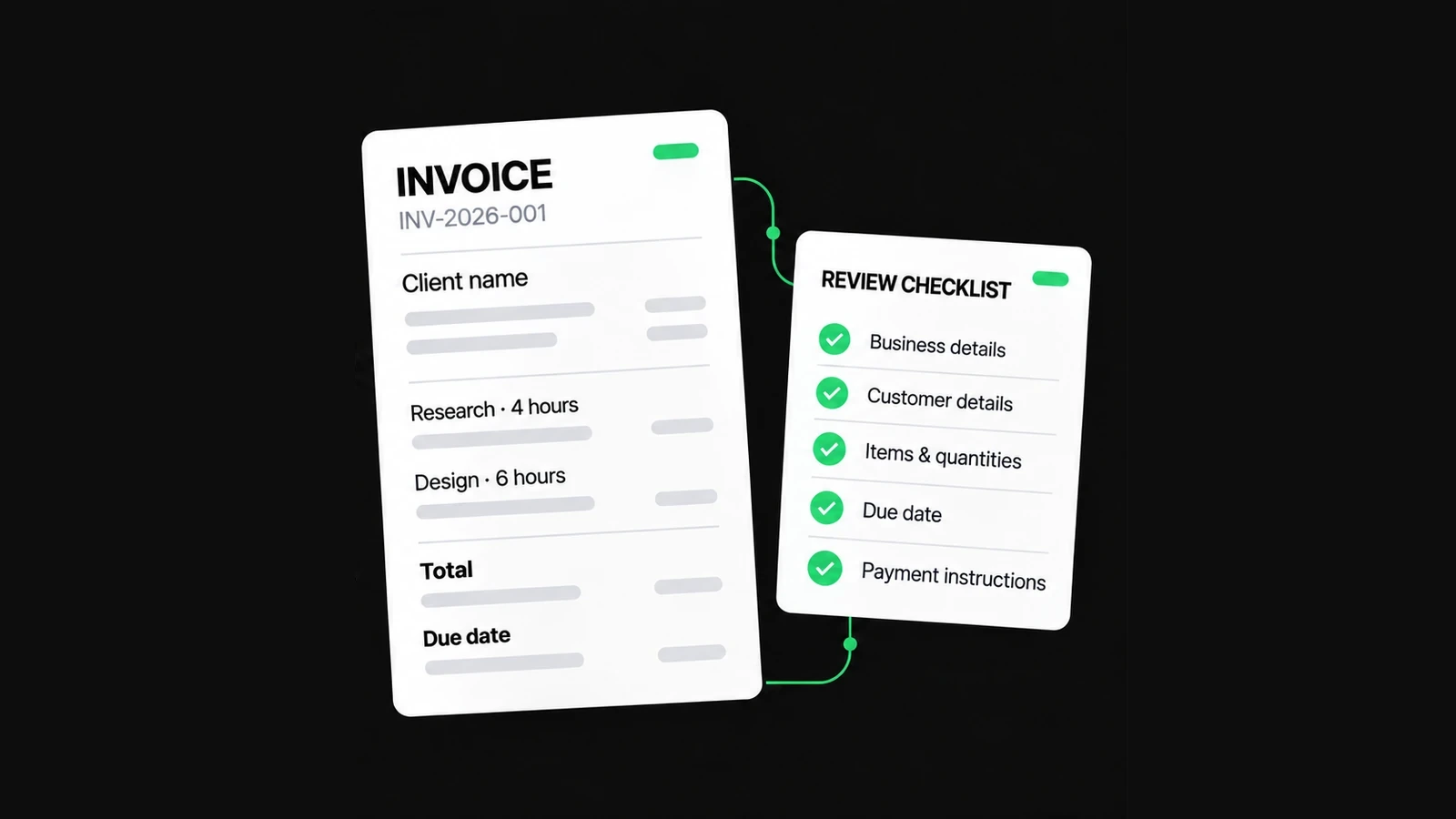
Final pre-send landscaping checklist
- Confirm the actual payer, property reference and billing period.
- Separate recurring maintenance from seasonal and one-off work.
- Match quantities and visit dates to the real work log.
- Check which materials, disposal and travel were already included.
- Record who approved every additional line and at what price.
- Recalculate labor hours, units, material subtotals and overall charge.
- Treat rain-delayed, cancelled and unfinished work according to the agreement.
- Determine applicable tax treatment and local consumer rules.
- Save the issued invoice and supporting approvals, logs and receipts.
A good landscaping invoice follows the rhythm of the actual job. It should let the customer see which visits and materials they are paying for, what changed, and why the total is correct, without forcing them to decode an internal worksheet.
About this resource
Product instructions are based on the current free-tool implementation; examples are synthetic and their arithmetic is checked. This is practical product guidance, not professional legal, tax or accounting advice.
For how the tools operate, see the Free Tools Terms of Use and Privacy Policy. Send corrections to hello@ninebrief.com without including confidential customer documents.