A clear auto repair invoice identifies the customer, vehicle and repair order, then itemizes diagnosis, authorized labor, parts, quantities, fees and applicable tax. Match the final charges to the written estimate and documented approvals for any extra work, and record the service and warranty information required by local law. An invoice is a bill, not a substitute for the diagnosis, safety documentation or customer authorization.
In this example
Link the invoice to an approved repair order
A garage may complete three distinct stages before the customer pays. First, the customer describes a problem and may approve diagnosis. Second, the workshop inspects the vehicle and proposes a specific repair with an estimate or quote. Third, the customer authorizes work and the workshop records the parts and labor actually supplied.
The invoice belongs at the billing stage. It should not rewrite an estimate into a claim that all possible repairs were authorized. Nor should it conceal the difference between a diagnostic visit and a completed repair.
The US Federal Trade Commission's Auto Repair Basics guide advises consumers to ask about repair pricing, written estimates and approval before spending beyond a specified amount. The actual legal requirements vary by state and municipality. In Canada, Ontario's guide for auto repair businesses describes regulated estimates and invoices with specific identifying information and authorization obligations. These are distinct jurisdictions.
For small workshops, the best operational habit is simple: connect the customer's approval to the repair order, the repair order to actual completed work, and the completed work to the final bill.
Identify the right customer and vehicle
A useful repair invoice includes the workshop's legal or trading name, contact information, customer billing name, invoice number, issue date, due date and repair-order reference. Vehicle information is needed to identify the job, but how much detail is legally required varies.
Depending on the market and purpose, relevant vehicle details can include year, make, model, registration/licence number, vehicle identification number (VIN), mileage or odometer reading on arrival and completion. Ontario's official business guide lists specific customer, vehicle and repair details for regulated invoices. Do not assume its full list is the mandatory format in another country.
If a corporate fleet manager authorizes the work, the person who delivered the car may not be the account holder. Verify whether the invoice is addressed to a company, lease provider, insurer or private owner under the actual agreement. A fleet unit number and purchase-order reference can help accounts payable match the charge.
Treat vehicle and contact data responsibly. A real VIN, registration plate, customer home address or security code should not be copied into a public demo, social-image mockup or analytics event. The sample below uses a fictional job reference only.
Show diagnostics separately from repair labor
Diagnosis is work, but it is not the same as replacement of a faulty part. A technician might spend time testing a complaint before knowing which part is needed. Some shops charge that time separately; others apply an agreed diagnostic fee to a later repair. The rule should be explained before charging the customer.
The FTC guidance advises asking about diagnostic charges and how a shop computes labor. The FTC notes that some shops use flat-rate labor time and others actual technician time. Do not describe a flat-rate labor charge as hours personally clocked if it is based on a book time; label the charging method accurately.
If a customer approved a $90 diagnosis but not the resulting $900 repair, the workshop should not treat approval of diagnosis as blanket approval of the repair. Local laws may have even stronger rules about authorization and estimates.
On the final invoice, use clear descriptions such as "Brake noise inspection and road test — authorized diagnostic labor." A vague line called "inspection" gives the customer less help when comparing the work order.
Name the parts and their condition honestly
A parts charge should tell the buyer what was supplied, the quantity and the agreed price. Where needed, identify whether a component is new, remanufactured, rebuilt or used. Product and safety descriptions matter: "front brake pads" is more informative than "car parts."
The FTC Auto Repair Basics guide explains common categories of replacement parts and notes that disclosure requirements vary by state. Some jurisdictions require specific parts and warranty disclosures. Do not use vague phrases such as "original" or "OEM" if a different part was actually installed.
A service kit can be billed as a genuinely agreed package, but keep sufficient supporting part details for warranty claims, insurance, recalls and repair traceability. A customer may reasonably need to know whether two rotors or one were replaced, especially if two appear in the charge calculation.
For parts not fitted, do not bill them as supplied. If a vehicle arrives with customer-supplied parts, establish in advance how labor and any warranty limitations will be handled under applicable consumer law.
A worked $629 brake-repair invoice
Consider a fictional workshop, Harbor Auto Service, billing customer Cedar Logistics for an approved front-brake job. The workshop completed a diagnostic inspection, replaced a set of front pads and two front rotors, and billed the separate approved workshop-supplies charge. The quote and recorded approval covered these items.
The following numbers are illustrative US dollars, before any applicable sales tax, environmental charge or other regulated fee. They are not recommended automotive labor rates or a market price.
| Completed line | Agreed unit calculation | Charge |
|---|---|---|
| Diagnostic brake inspection | 0.8 h × $110 | $88 |
| Front brake repair labor | 1.8 h × $110 | $198 |
| Front brake pad set | 1 set × $135 | $135 |
| Front brake rotors | 2 × $95 | $190 |
| Workshop supplies, previously approved | 1 × $18 | $18 |
| Total before tax | $629 |
Recalculate: $88 + $198 = $286; $286 + $135 = $421; $421 + $190 = $611; $611 + $18 = $629. The part counts are not interchangeable: one brake-pad set at $135 and two rotors at $95 each create two different line totals.
Suppose the initial authorization was for these exact lines, totaling $629 before tax. The invoice can show that the approved work was completed at the original amount. If no payment has been received, the full commercial $629 remains outstanding before tax. If a confirmed $200 payment has been allocated to the same bill, the commercial balance is $429 before tax, but do not confuse that receipt with a reduction in the agreed service price.
No $120 brake-fluid flush appears in the invoice. Imagine the technician recommended it but the customer did not authorize it. A recommendation on an inspection form is not a completed, billable repair. If it is later approved, document when, by whom, at what price and under what legal authorization rules.
Do not turn an estimate into permission for any price
Repair work can uncover unexpected problems. That makes an estimate useful, but it does not give the garage unlimited authority to exceed a quoted budget.
The FTC recommends estimates that identify the condition, needed parts and anticipated labor and describe how approval will be obtained before exceeding an agreed amount. Ontario has particularly concrete rules: its auto-repair business guide describes a written-estimate regime and states that a final invoice cannot generally exceed the written estimate by more than 10%, subject to its statutory framework. That is an Ontario rule, not an international rule or a blanket permission to add 10%.
In Australia, Western Australian Consumer Protection's repair quoting guide distinguishes estimates and fixed quotes and advises repairers to contact customers before proceeding with additional costs. Australian consumer law can also limit misleading pricing and unauthorized extra work.
For every added repair, keep the proposed work, estimate of additional cost, authorization method, actual authorization and updated total. Do not rely on "customer agreed on the phone" if local rules require a written or otherwise recorded confirmation.
Make the invoice explain authorized variations
An approved variation needs its own clear description. If a technician discovers a faulty hose during an agreed inspection, the customer should have the opportunity to authorize additional repair before it is performed where required.
A well-kept variation record might say: "After diagnostic stage, additional coolant hose replacement proposed at $160 before tax; customer approved by recorded message at 11:20 on the service date." The final invoice should list the work only if performed, and its amount should reconcile with the accepted change.
If the customer refused the extra work, preserve that refusal without turning it into a charge. An estimate for work not performed is not the same as an invoice for delivered work.
Sometimes the safest action is to stop, make the vehicle safe under the proper professional procedure and explain the condition. This article is about billing documentation, not automotive repair instructions or permission to release an unsafe vehicle.
Discounts, diagnostic credits and deposits require precision
A workshop may waive a diagnostic fee when a customer approves a repair, accept a booking deposit or receive a part-payment at drop-off. Each has a different meaning.
A discount or waived diagnostic charge changes what the customer is charged under the agreed terms. A confirmed deposit or part-payment is money received and allocated to a transaction. Do not describe the same amount as both a price reduction and a payment unless two separate events actually occurred.
For the $629 example, if the shop genuinely waives the $88 diagnostic fee, the revised commercial charge is $541 before tax. If the fee remains valid but the customer has paid $88 toward it, the full charge remains $629 and the commercial balance is $541 before tax. The final amount outstanding is the same in this narrow example, but the accounting and supporting documents are different.
A workshop with a taxable supply may need additional rules for discounts, deposits and refunds. Do not assume the free invoice generator automatically classifies those transactions.
Warranties and consumer rights are not decorative invoice notes
Automotive work often carries legal obligations about service quality and, in some places, parts or labor warranties. A workshop's own written warranty may add promises, but it cannot necessarily remove consumer rights created by law.
The FTC's warranty discussion advises reviewing coverage, limitations and procedures and checking state law. Ontario's auto-repair business guide details obligations concerning new or reconditioned installed parts and labor. In Australia, the ACCC's consumer-guarantees guidance explains due care and skill for services and recognizes consumer remedies.
Do not invent a universal "90-day warranty" or "all sales final" term. When the workshop offers an actual warranty, keep the valid terms, covered components, start date and process accessible and consistent with local law. An invoice footer is not a substitute for a required warranty statement.
Keep the completed repair order and payment evidence
The invoice summarizes the customer's charges. The work order should retain the job's technical and authorization history. Depending on actual rules, records may include mileage, inspection results, approvals, parts fitted, technician notes, test completion and returned-parts information.
Keep sales and purchase evidence separate. The invoice you send to the customer records what you charged. Your supplier invoice documents what your workshop purchased. A bank receipt records actual payment. The IRS recordkeeping guidance describes these as supporting documents for business records.
If an insurer, fleet operator or lease company pays, record who the actual debtor is and whether an excess or deductible is due from the vehicle owner. Do not bill two parties for the same share of a repair without an explicit allocation.
If a charge is later corrected, keep the originally issued invoice, the adjustment and the reason. NineBrief's recordkeeping guide explains a small-business filing method that can accommodate those linked documents.
Regional requirements need a local check
The invoice layout and required disclosures can differ by location and by the customer type. The FTC offers US consumer guidance but explicitly points to state and local rules. Ontario has a detailed motor-vehicle repair regime. Australian states and territories enforce consumer protections and repair-quoting rules. UK and other markets may have different rights, tax requirements and recordkeeping obligations.
Do not transplant an Ontario estimate cap, a US "shop supplies" practice or an Australian quote rule into another jurisdiction without checking it. The applicable sales taxes for parts versus labor also vary; this article's $629 example intentionally excludes tax.
For a regulated shop, verify the current authority's mandatory identifiers, authorization evidence, estimate and invoice content, warranty wording, dispute handling and retention periods before adopting any generic template. A fictional invoice can illustrate arithmetic; it cannot certify a legal document for every garage.
Build an ordinary repair invoice with NineBrief
The released NineBrief Invoice Generator lets a business prepare an ordinary invoice with customer details and itemized charges. Use it to list diagnostic work, approved labor, parts, quantities and permitted fees, and check the final PDF against the signed or recorded repair order.
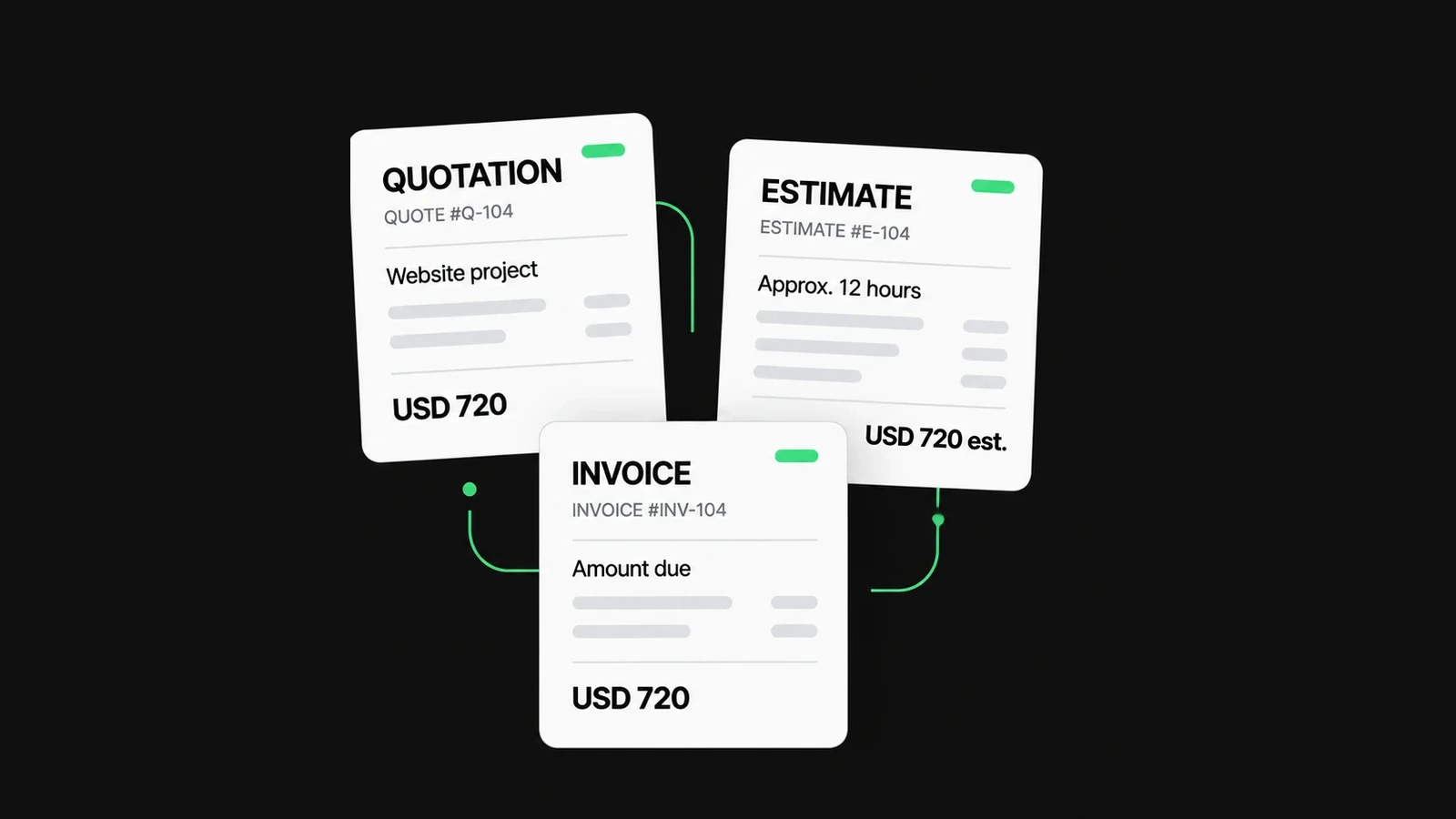
The Quote/Estimate Generator can support the pre-work pricing document where appropriate, while the quote and invoice guide explains their distinct purposes. The current free tools do not purport to function as a professional automotive shop-management system.
This article does not claim that NineBrief performs VIN decoding, fault diagnosis, technician dispatch, parts ordering, warranty administration, regulated approval capture, invoice-to-bank reconciliation or integrated repair-shop tax compliance. Maintain those records and obligations through appropriate tools.
Auto repair invoice questions
Should diagnostics appear as a separate line?
Often yes, if that is how the charge was agreed and provided. Some shops use a flat fee or waive it after a repair; the invoice should reflect the actual agreement and any local requirements.
Can I charge more than the estimate?
Do not assume so. Get appropriate authorization and verify local law. Ontario has specific repair-cost rules that must not be generalized worldwide.
Do I have to identify every replacement part?
Itemizing quantities and meaningful descriptions makes the bill clearer, and some jurisdictions prescribe parts disclosures. Follow the actual local requirements.
Can I include a workshop supplies fee?
Only if the charge is legitimate under the agreement and applicable law. Do not add a hidden fee after the work merely because other shops commonly use one.
Is a paid invoice the same as a repair warranty?
No. An invoice records charges; proof of payment documents money received; a warranty or statutory consumer right is a separate matter.
Does NineBrief manage a garage's repair orders?
The free public generator prepares documents; it is not an automotive inspection, scheduling, parts or warranty platform.
Before giving the customer the final bill
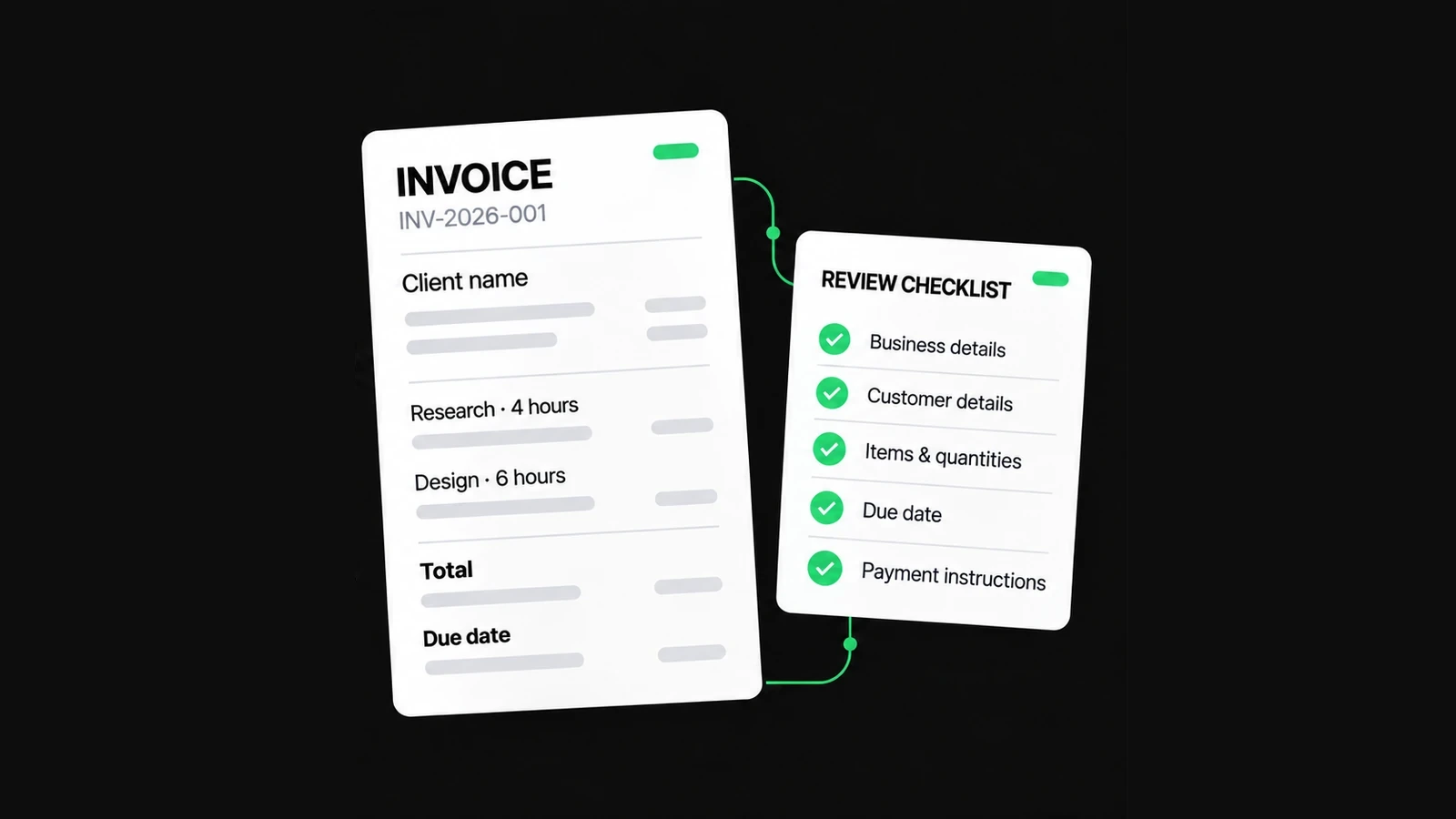
- Confirm the paying customer, invoice number and repair order reference.
- Check vehicle identifiers and odometer details required by local law.
- Match diagnostic and repair charges to actual authorized work.
- Verify the part description, condition, quantity and unit price.
- Calculate labor consistently with the charging method disclosed.
- Remove unapproved recommendations from billed lines.
- Reconcile approved variations, lawful fees, discounts and confirmed payments.
- Check applicable tax treatment, consumer disclosures and warranty information.
- Retain the estimate, authorization, work order, final invoice and actual receipts.
A trustworthy auto repair invoice should make the customer confident about the work authorized, work completed and charge assessed. The best bill is traceable to the repair order, not just mechanically correct on a calculator.
About this resource
Product instructions are based on the current free-tool implementation; examples are synthetic and their arithmetic is checked. This is practical product guidance, not professional legal, tax or accounting advice.
For how the tools operate, see the Free Tools Terms of Use and Privacy Policy. Send corrections to hello@ninebrief.com without including confidential customer documents.